Metal Roofing vs Asphalt Shingle
When comparing metal roofing vs asphalt shingle, it’s important to understand the key differences in cost, durability, and long-term value to choose the best option for your home. For sloped roofs you might be considering metal roofing, with an alternate being asphalt shingle. However, you might have questions about each type of roof system. Following is information intended to help you make an informed decision regarding whether to pursue a metal roof or asphalt shingle.
Metal Roofing
Metal roofing is available in a variety of profiles, materials and colors. Typical profiles are corrugated, pan profile and standing seam.
- Corrugated refers to an undulating up-and-down repetitive pattern, generally described as rolling hills and valleys. This is a more rustic profile, and is secured with exposed fasteners.
- Pan (or tray) profiles generally have straight lines, with an angle up, a flat section, an angle down, another flat section, in a repetitive pattern. This is a somewhat industrial look, and is secured with exposed fasteners.
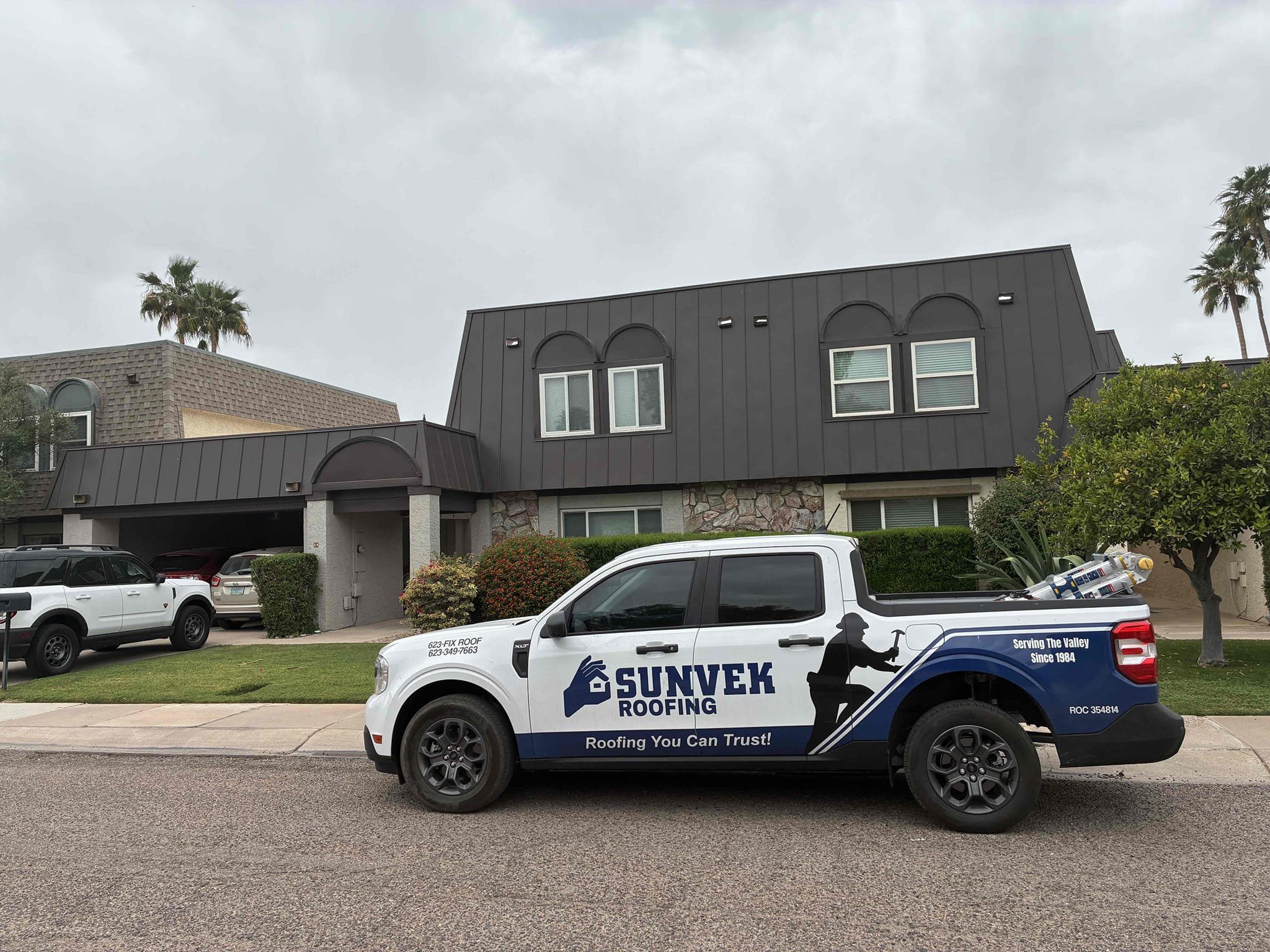
- Standing seam in all its variants refers to a flat pan of a standard width, with a vertical leg on one side and a receiver on the other. This is what is typically thought of when referring to a metal roof. The fasteners are hidden.
Metal roofing is typically formed using natural steel (can rust), galvanized or zincalume, painted steel, painted aluminum, copper or zinc. The material cost increases as you move from one material to the next.
There is a wide variety of painted colors available for metal roofing, together with natural finishes for zinc and the option of patina finishes for copper.
Depending on the profile, metal roofing can be installed on a very low slope roof (1/4:12) to a very steep roof, while maintaining water-tightness.
Metal roofing is commonly selected for 2 reasons – lightweight and a variety of aesthetically-pleasing color and profile options. When designing a structure for installation of metal roofing, the truss system can be much lighter than would be required for tile or slate. Metal roofing is generally less than two pounds per square foot, installed. This compares favorably with tile, which typically is as much as twelve pounds per square foot, installed.
With a quality underlayment, a properly installed metal roof in the Phoenix area can last as long as 50 years with minimal care. At some point, underlayment’s will fail, penetrations will need attention and paint finishes will fade and/or break down.
Asphalt Shingles
Asphalt shingles used to be the common roofing material of choice. No longer. With the availability of a wide variety of options – tile, metal, slate, wood shake – and changing tastes, shingles are no longer as popular in the Phoenix area as in the past. Tile is more common on new construction, but shingle are still installed.
Shingles are available in two gradients – standard architectural and premium. A variety of colors and blends are available. In the premium category, the different manufacturers offer a variety of profiles and thicknesses, including variegated thicknesses. Warranty lengths range from thirty years to “lifetime”. A lifetime is generally defined as fifty years.
When considering shingles, the typical big names come to mind – GAF, IKO, CertainTeed, Tamko, Owens Corning. There are other regional shingle manufacturers as well. For standard shingles, installed weight is less than three pounds per square foot. Premium shingles could have an installed weight of up to five pounds per square foot.
Historically, shingle installation costs have been lower than other forms of roofing. That is changing, particularly for the premium shingles. The installed cost for a standard shingle will be less than for a lower-end metal roof system, while the installed cost for a premium shingle will be comparable to a mid-range metal roof system.
Shingle roof systems have two distinct advantages over other roof systems. They require minimal maintenance over the lifetime, and they are generally cost-advantageous.
Generally, shingle roofs are installed only on roofs with a slope of at least 2:12, since otherwise a self-adhered underlayment is necessary to minimize the risk of leaking.
Conclusion
There are benefits and drawbacks to both metal roofing and asphalt shingles. If you can find a balance of looks, cost and performance that meets your desires, that will determine which roofing material you will want to install. If you’d like assistance with this, we’d be happy to provide our insights and suggestions. Simply schedule an appointment online or call our office at 623-Fix Roof (349-7663) and have our experts lend a hand.