Types of Roofing Materials
There are many types of roofing materials that can be installed on a roof. We’ll note the more common varieties, with commentary on each.
FLAT roofing materials
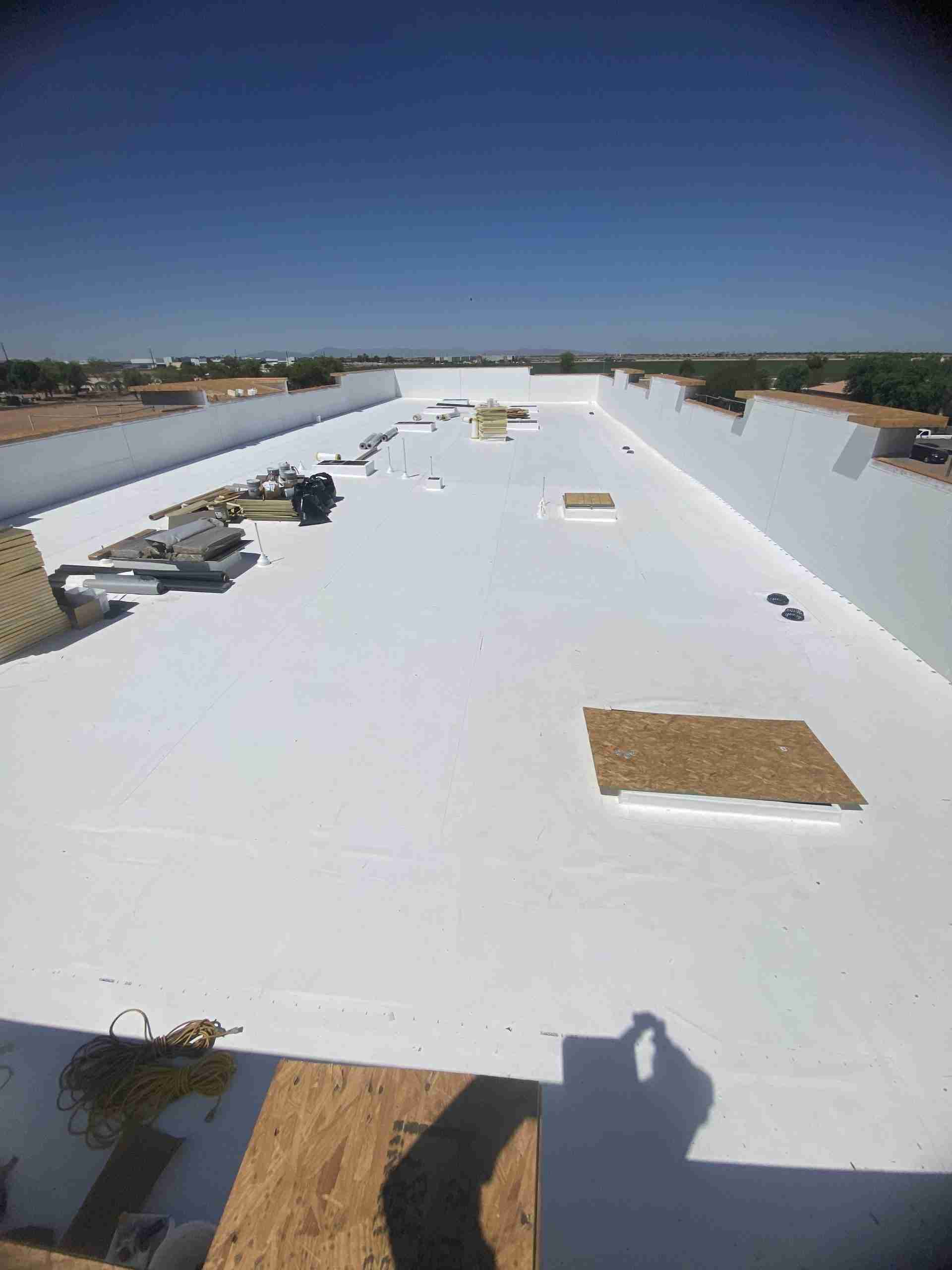
If you have a flat roof, which is generally defined as having less than a 2:12 slope (means 2” rise over 12” of distance), there is a variety of options available. Typical types of flat roofing materials include:
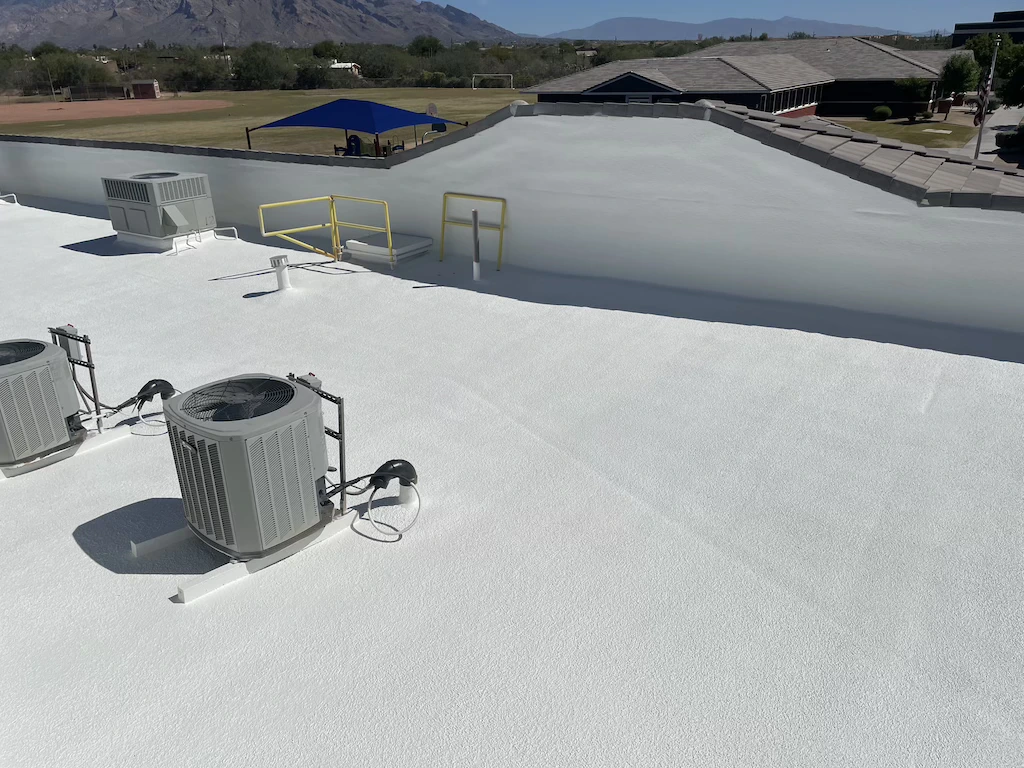
1. SPF (spray polyurethane foam), with either elastomeric acrylic or silicone coatings
2. TPO (thermoplastic polyolefin)
3. PVC (polyvinyl chloride)
4. EPDM (ethylene propylene diene monomer)
5. SBS (styrene butadiene styrene ) modified
6. APP (atactic polypropylene) modified
7. Some metal roofing profiles, typically steel, and may be painted or galvanized
SLOPED (or pitched) roofing materials
Sloped roofs are generally defined as having a greater than 2:12 slope (meaning 2” of rise over 12” of distance). A wider variety of material appearances are available, and these include:
1. Shingle – standard or premium
2. Tile – concrete, clay or sandcast, in a variety of profiles and colors
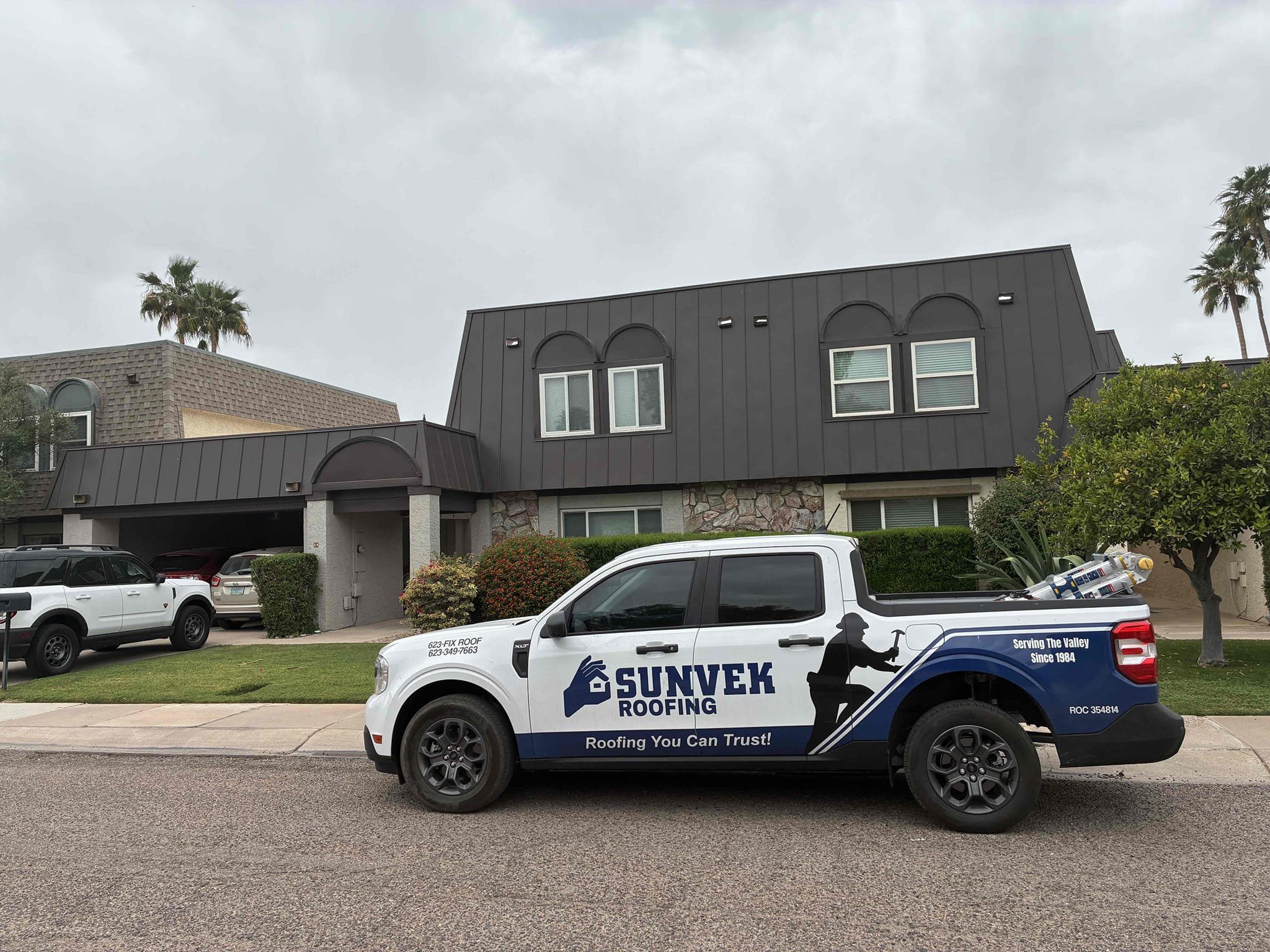
3. Metal – steel, aluminum, copper, zinc, in a variety of finishes, colors and profiles
4. Slate – natural stone and synthetic
*For sloped roofs, remember that what you see is decorative (although it does shed most water), what is underneath is the waterproofing. One of the primary considerations for sloped roofing materials is aesthetics, since it contributes to the overall building appearance.
Commentary on Different Roofing Materials
Spray Polyurethane Foam
Spray polyurethane foam is comprised of two compounds, resin and isocyanurate, mixed together with pressure and heat, sprayed onto a roof. The resultant product rises and hardens, then is typically coated with either elastomeric acrylic or silicone to protect it from the sun’s ultra-violet rays and reflect heat. Foam provides insulation value, noise reduction, rigidity, no seams or lap joints to leak, the ability to conform to odd shapes and angles and durability. If properly applied and maintained, a foam roof is intended to be a more permanent roof. It is more commonly applied in the southwestern United States, although it can be applied elsewhere if silicone or urethane coatings are applied over it to aid in resistance to damage from ice and snow.
TPO and PVC
Both systems are roll products that can be applied adhesively or mechanically. They provide waterproofing but have somewhat different properties. When properly installed, they can provide an initial service life of 20-25 years, which can be extended through application of coating systems.
EPDM
This is the stereotypical “rubber” roof. It is roll product that is adhesively applied and can expected to have an initial service life of 20-25 years, which can be extended if ballast (rock or other protective covering) or coatings are applied over the surface.
SBS and APP
These are roll products that include oil-based products and may be self-adhered or torch-down. They may be smooth-surfaced or have granules. If properly installed, these will generally have an initial service life of 25-30 years, which may be extended with application of coatings. Quite often, an emulsion will be applied over the system, with embedded mesh, followed by either acrylics or silicone, and this may effectively increase the service life by another 20 or so years.
Metal
There are high-rib metal profiles available which are intended for installation over low-slope roofs. They hold up very well, and if the finish begins to degrade (paint flaking, rust appearing), can typically be restored with primers and coating.
Shingles
Asphalt shingles are likely the most commonly installed material on sloped roofs. They are fairly economical, look attractive and are quite durable. For a standard shingle, the service life is around 20-25 years, while premium shingles may last 40-45 years. A wide variety of colors and profiles are available.
Tile
Tile roofing is becoming increasingly popular as a roofing material, with areas in which it is installed becoming wider. In Europe, tile is commonly installed in snowy climates, and this is becoming accepted in the USA. With an extensive array of colors, a number of profiles and several materials to choose from, tile is an acceptable option for virtually any roof. Outside of aesthetics, keep in mind the weight factor. Tile can weigh up to ten pounds per square foot, so the structure must be designed to handle the weight. Tile can last for hundreds of years, depending on the material it is made of.
Metal
With a variety of options in material, profiles, colors and finishes, metal can be an attractive option for a sloped roof. It is durable and aesthetically pleasing. There is a wide range of cost associated with metal, due to the profiles and materials used. It is applied on industrial buildings, high-end offices and homes.
Slate
Natural stone slate is heavy and can last for hundreds of years. If installed correctly, it is an excellent roofing material. To reduce the cost and still get the appearance, synthetic options are now available. Ultra-violet resistance and color-fastness are considerations with the synthetic options.
Wood Shake or Shingle
If split, it is called a shake, if sawn it is called a shingle. Wood is an excellent option, particularly for a climate with higher humidity, since it will hold up well. It is an attractive option for steep-slope roofing, since it has a balance of weight, durability and beauty.
Hopefully the above provides some insight into the options available for roofing. For assistance or suggestions for your particular needs, feel free to call SUNVEK at 623-Fix Roof (349-7663) or schedule an appointment with one of our roof consultants.