Maintaining Your Roof in Paradise Valley, Arizona
Paradise Valley is an upscale community nestled between Phoenix and Scottsdale. Homes tend to be newer, larger and custom. Roofing options tend to be higher value. How do you maintain a roof in Paradise Valley?
Roof Types in Paradise Valley
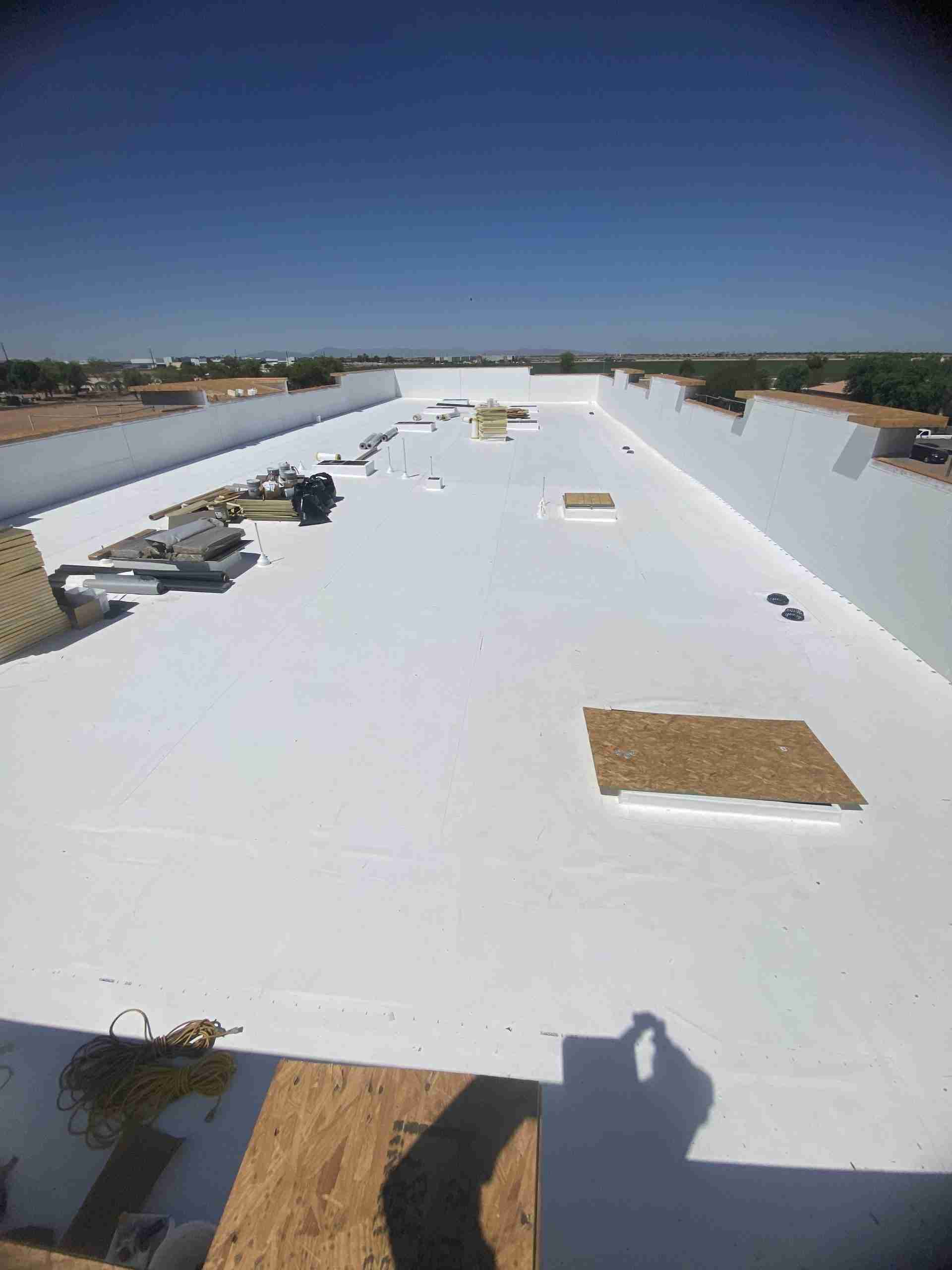
Roofs are placed into two generic groupings. The first is known as a “flat roof”. This roof has a drainage slope ranging from perfectly flat (this would likely be a home built before 1950) and one that has a slope of up two inches of drop over twelve inches. The slope of a flat roof is displayed as X:12, with “X” being the drainage slope over twelve inches. Common roof types in flat roofs are spray polyurethane foam, roll products such as cap sheet, and possibly even thermoplastic polyolefin (TPO).
The grouping known as pitched roofs includes anything with a slope of greater than 2:12. Typical pitched roof materials include metal, tile, slate and shake.

Maintaining Flat Roofs
Spray Polyurethane Foam
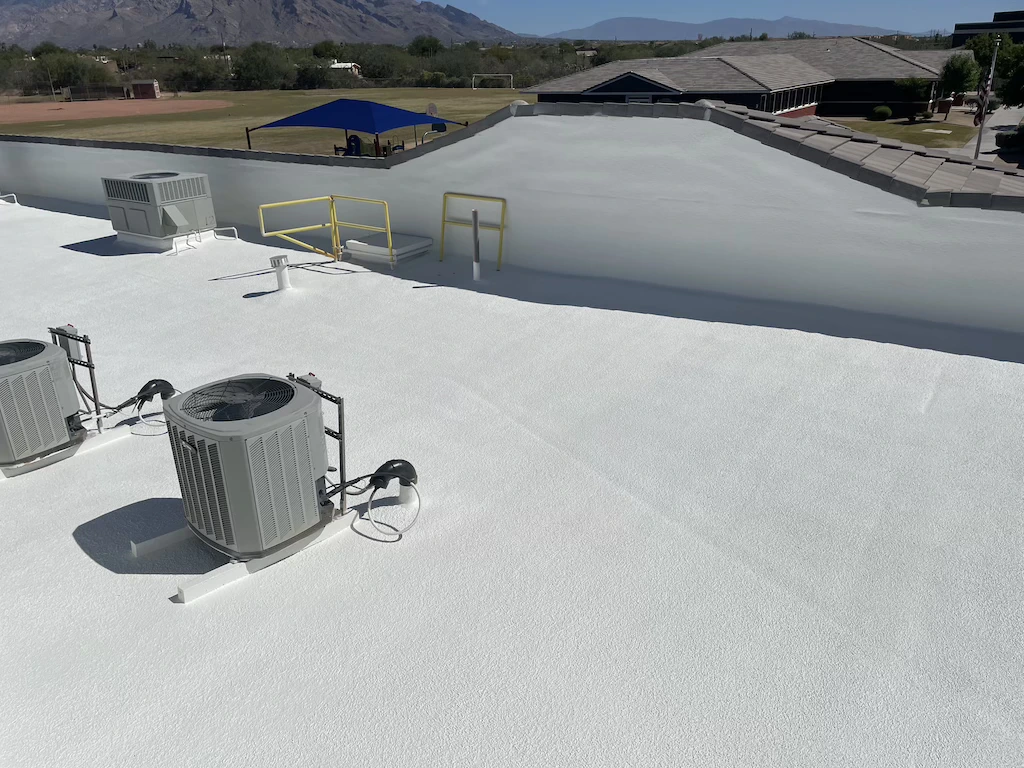
This is an excellent roofing option, since it is seamless, insulating, sound-proofing, and when installed and maintained properly, is intended to be a permanent roof solution. Polyurethane foam provides an R-value of approximately 6.0 per inch of thickness. If you consider a disposable cooler, polyurethane foam does the same thing on your roof – provides waterproofing and maintains the temperature inside. The typical roof application of polyurethane foam is approximately 1” of thickness. With perhaps 3” of polyurethane foam on your roof, ideally with a white elastomeric acrylic coating, there would be virtually no heat transference from outside to inside. Keep in mind that any penetrations (holes through the roof for ventilation, etc) will permit heat transference, so those should be minimized. Polyurethane foam can be used to minimize heat gain in walls as well.
Maintenance of a spray polyurethane foam roof system is relatively simple.
- Remove any debris from the roof
- Wash the roof to remove accumulated dirt, then let dry
- Walk the roof with a utility knife, caulk gun and quality urethane caulk, cutting out and filling any bird/bee holes or other surface damage
- Coat the roof with a quality elastomeric acrylic coating, generally two coats every 5 years
Cap Sheet
A broad classification which includes roll products that are torch-applied, hot-or-cold asphalt-applied, and even self-adhered. Available in a either smooth or granulated finishes, in a variety of colors ranging from dark gray to white. Cap sheet in all its varieties is a durable waterproofing roofing material. Due to its composition, it does draw heat into the space below, and is non-insulating. Minimal maintenance is required for this product in the first 10-15 years of service, after which it can be coated (usually with a quality elastomeric acrylic product) to extend its service life. If the lap joints (where one roll overlaps another roll) are properly sealed, there is little risk of leaking with cap sheet systems. Penetrations should be checked at least every other year for degradation, and can generally be resealed with a quality asphaltic-type roof cement, or if the roof has been coated, with a urethane sealant.
TPO
A heat-welded roll-product available in a variety of colors and thicknesses, TPO is a relative newcomer to the residential space. TPO is commonly installed on commercial projects where long-term durability at an economical cost is desired. Some manufacturers will now warranty the product on residences, so it is starting to become more popular in the higher-end residential market. If installed properly, little or no maintenance should be needed for at least the first 10 years of service life. Subsequently, penetrations should be checked and resealed as necessary by a roofer competent with TPO. Toward the end of the initial service life, TPO can be coated with a quality elastomeric acrylic to extend the service life, with periodic recoat applications thereafter.
Maintaining Pitched Roofs
Metal
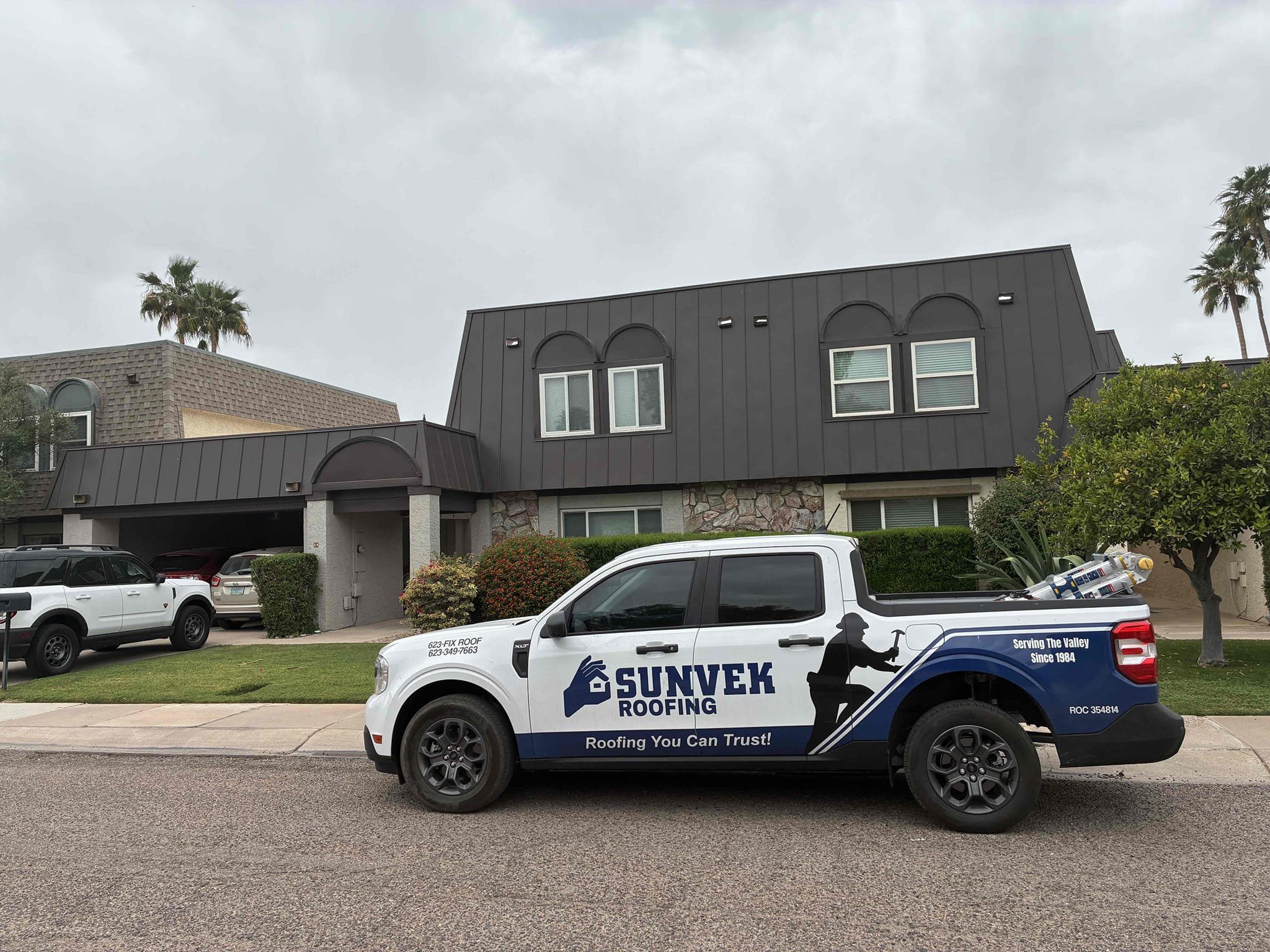
This includes copper, zinc, steel and aluminum, in a variety of profiles and even painted. Copper will patina naturally to a dark brown, much like a dirty copper penny. Zinc retains a soft gray appearance, steel can be natural (which will rust), galvanized or galvalume (shiny steel to soft blue tone), or even painted. Aluminum generally is painted, since it otherwise oxidizes in an unpleasant manner.
Copper and zinc, properly installed over a quality underlayment, should last 60-80 years, or more. Penetrations and drainage channels need to be periodically checked to ensure seals are tight and no debris has collected. Where penetration seals are degrading, typically a quality urethane sealant is applied as necessary, and/or boots (these are what are initially installed at penetrations for water-tightness) may be replaced.
Steel and aluminum roof systems hold up very well in our climate, although paints will fade (and on lower-quality products will peel off). A Kynar finish generally provides more durable color-fastness and degradation resistance.
Tile
Materials used in manufacture of tiles include cement, clay and sand-clay combinations blended with other materials for color and texture. Cement tiles are assembly-line manufactured in molds, generally with tints added to the mix for color. Where tint is blended with the concrete prior to manufacture, the tiles are known as “color-thru”. Some cement tiles continue through a spray booth, where different paint patterns are sprayed onto the top surface. These are commonly known as “slurry-kote” tiles. Both concrete tiles are durable, with a typical life span of 50 or more years, but the “slurry-kote” tiles will experience paint fading and surface oxidation, so likely should be painted after 20 years or so.
Modern clay tile is generally mold-manufactured as well, continuing on the assembly line through a kiln, where all tile are uniformly heated for strength. Tile color may be the natural clay color, or may be the result of tints blended with the clay prior to manufacture. Clay tile will generally hold up well for greater than 70 years.
Sand-clay combination tile are generally hand-made and sun-dried. Although beautiful and varied in appearance, the tile are quite brittle. They cannot be walked on after installation. If a hardener isn’t added during the manufacturing process, they may dissolve on the roof over a period of years. These are not a compliant tile, so waterproofing is entirely dependent on the underlayment beneath.
The underlayment is a critical element with tile roofs, since water does get beneath the tile. A quality underlayment will generally last 25-35 years, after which the tile will be lifted and new underlayment installed. Penetrations are generally sealed with metal flashings, so there should not be leaking at those locations. Drainage valleys may get blocked with debris, diverting excessive water beneath the tile. This will shorten the underlayment life, resulting in greater likelihood of leaking. Valleys should be checked at least biannually, and any accumulated debris removed.
Slate
Slate is a natural stone product, which can have excellent durability and be impervious to fading. It is available in a range of colors and blends. Unfortunately, it is also available in degrees of quality, from low-end dazzling color blends that are brittle and easily breakable to solid-color single composition slates that will last for centuries. The critical element with slate, beyond obtaining a top quality product to begin with, is the manner in which installed. Properly installed slate will not permit water movement beneath the slates, so minimal maintenance will required. Drainage valleys must be kept clean, and at time of installation, it is critical to ensure that penetration flashings divert water on top of the slate at the downhill side of penetrations. The downside to slate is weight and difficulty of finding skilled installers.
Shake
Cedar shake is a classic product. It used to be commonly installed on higher-end homes. In our climate, it tends to dry out and become brittle within a couple of years. It will warp in the process. Although it will retain water-tightness when it rains, it becomes a fire hazard at other times. We don’t get enough moisture (rain and humidity) to keep the shakes from drying out, so in event of a fire, they will burn rapidly. Maintenance is difficult, since dry shakes cannot be walked upon. Although we install cedar shakes roof still, we’ve noticed a distinct downward trend in the frequency of this product being installed.
Need Help Maintaining Your Roof in Paradise Valley, AZ?
No matter what type of roof system you have on your home in Paradise Valley, it’s beneficial to have it checked periodically. We usually suggest a roof walk once per year on flat roofs, and perhaps every other year on pitched roofs. The heat is hard on roofing products, and when accompanied by periodic cold rains, can be damaging to a roof system. If you’d like a check of your roof, and suggestions on maintenance, or perhaps even are considering a roof replacement, we’re certainly available to assist. Contact SUNVEK at 623-Fix Roof (349-7663) or online at sunvek.com/ to schedule an appointment. SUNVEK has been installing quality roof systems all across the Valley since 1984.