How Tucson’s Monsoon Season Damages Your Roof — and How to Prepare

Every summer, Tucson homeowners brace for monsoon season — and for good reason. From June through September, the Sonoran Desert transforms from a dry, sun-baked landscape into one that receives intense bursts of rainfall, high winds, hail, and blowing dust in a matter of minutes. For roofing systems already stressed by months of extreme heat and UV exposure, monsoon season is the ultimate test.
Understanding exactly how monsoon storms damage roofs in Tucson — and what you can do before the season starts to protect your home — is one of the most valuable things a Tucson homeowner can know.
What Makes Tucson’s Monsoon Season Different From Regular Storms
Tucson’s monsoon season is not just a period of increased rainfall. It’s a distinct meteorological pattern that brings weather events unlike anything the rest of the year delivers — and that creates specific roofing risks that require specific preparation.
- Intense, concentrated rainfall: Monsoon storms in Tucson can drop an inch or more of rain in under an hour. Roofing systems that handle light rainfall without issue can be overwhelmed by this volume — particularly flat and low-slope sections where drainage speed matters enormously.
- High winds and microbursts: Monsoon storms frequently produce microbursts — localized downbursts of high-speed wind that can exceed 60 to 70 mph in the Tucson area. These winds lift shingles, displace flashing, and damage roofing components in minutes.
- Hail: While not every monsoon storm produces hail, Tucson does experience hail events during monsoon season. Even small hail can bruise asphalt shingles, knock granules loose, and compromise the roof’s ability to shed water going forward.
- Blowing dust and debris: Haboobs — massive dust storms — precede many monsoon events. The abrasive dust carried by these storms scours roofing surfaces and clogs gutters and drainage systems, setting the stage for problems when the rain follows.
- UV-weakened materials going into the season: By the time monsoon season arrives in July, Tucson roofs have already endured months of extreme heat and intense UV radiation. Materials that might have survived a monsoon event when new are significantly more vulnerable after half a year of desert summer conditions.
How Monsoon Season Specifically Damages Tucson Roofs
Monsoon damage in Tucson follows predictable patterns. Here are the failure modes that roofing contractors see most frequently after summer storm events in the area:
Wind Damage to Shingles and Ridge Caps

Microburst winds during Tucson monsoon storms are one of the leading causes of shingle damage in Southern Arizona. High-speed winds create uplift forces that lift shingle tabs, crack shingles along their adhesive strips, and in severe cases remove sections of roofing material entirely. Ridge caps — the most exposed part of any roof — are frequently the first components to be displaced during high-wind monsoon events.
Critically, wind-lifted shingles that reseal back down after a storm are still compromised. The adhesive strip is weakened, the shingle is more susceptible to future uplift, and the integrity of the system has been reduced even if the damage isn’t visible from the ground.
Water Infiltration Through Compromised Flashing
Flashing around chimneys, skylights, vents, and pipe boots is particularly vulnerable during monsoon season. The combination of UV degradation during the pre-monsoon summer months and the intense wind-driven rain of storm events frequently causes flashing to crack, lift, or separate — creating direct water entry points at the most critical junctions of the roofing system.
Wind-driven rain during Tucson monsoon storms penetrates roofing systems at angles that typical vertical rainfall does not. Flashing details that would shed water under normal conditions can fail completely when rain is driven horizontally at high speed.
Ponding Water on Flat and Low-Slope Roofs
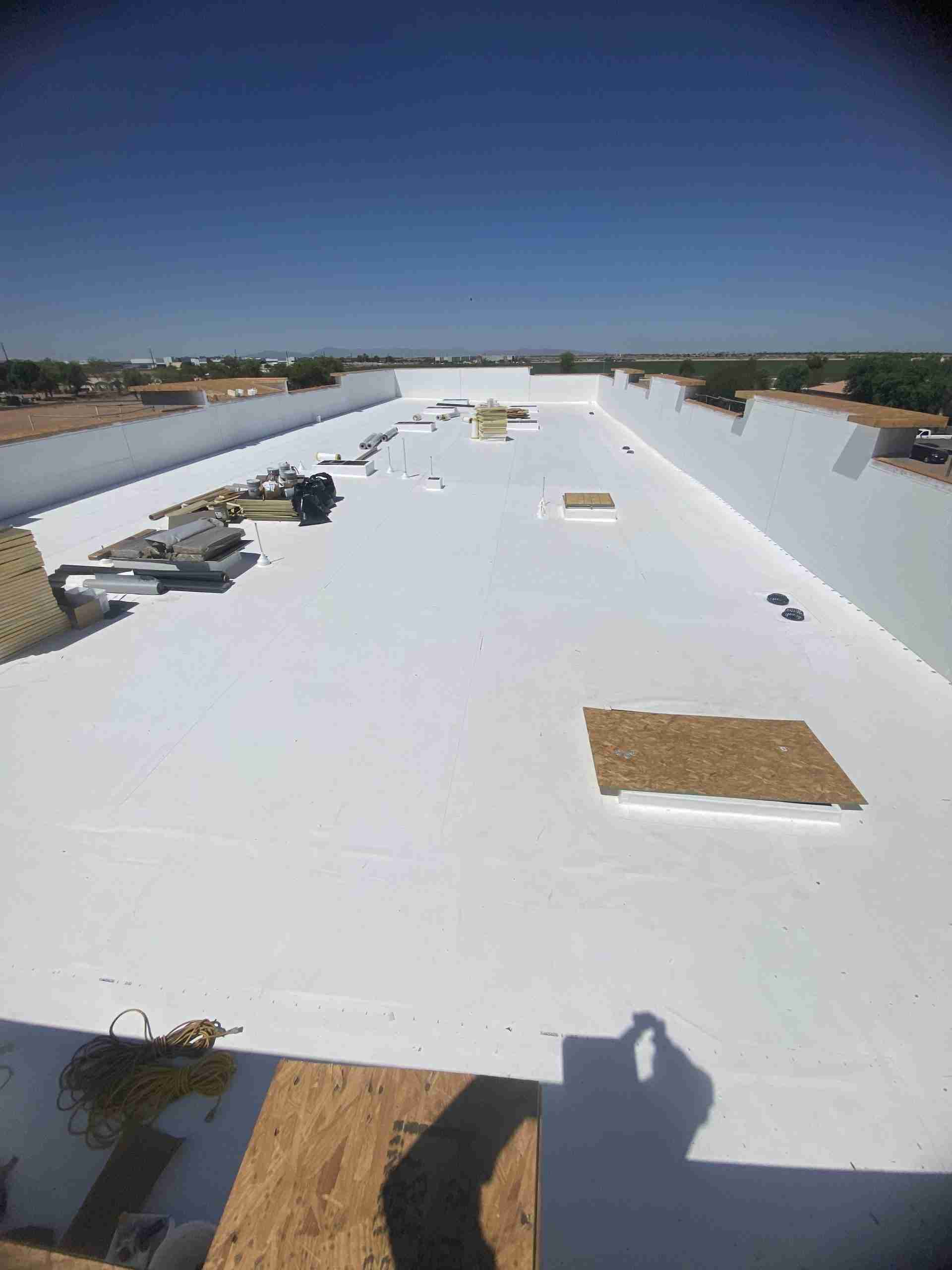
A significant portion of Tucson’s housing stock includes flat or low-slope roofing sections — and these sections are particularly vulnerable during monsoon season. When debris clogs drains and scuppers, or when drainage systems can’t keep pace with the volume of water a monsoon storm delivers, water pools on the roof surface.
According to the National Roofing Contractors Association, standing water that remains more than 48 hours after rainfall significantly accelerates the deterioration of roofing membranes and increases leak risk. In Tucson’s monsoon season, this can happen multiple times in a single week.
Hail Impact Damage on Shingles and Tile
When hail accompanies a monsoon storm in Tucson, asphalt shingles sustain impact marks that knock granules loose and expose the underlying asphalt mat. This damage is almost always invisible from the ground — a roof can look completely intact after a hail event while sustaining significant compromise to its UV resistance and waterproofing performance.
On tile roofs, hail can crack individual tiles — which creates leak pathways that don’t become apparent until subsequent rain events. A post-storm professional inspection is the only reliable way to identify hail damage on either shingle or tile systems.
Debris Impact and Gutter Damage
The wind that precedes and accompanies monsoon storms carries branches, gravel, and debris that can crack shingles, puncture roofing membranes on flat sections, and damage gutters on impact. Even branches that don’t appear to cause obvious damage can create micro-fractures in shingles that become leak points under the sustained rainfall that follows.
Foam Coating Failure Under Water Stress
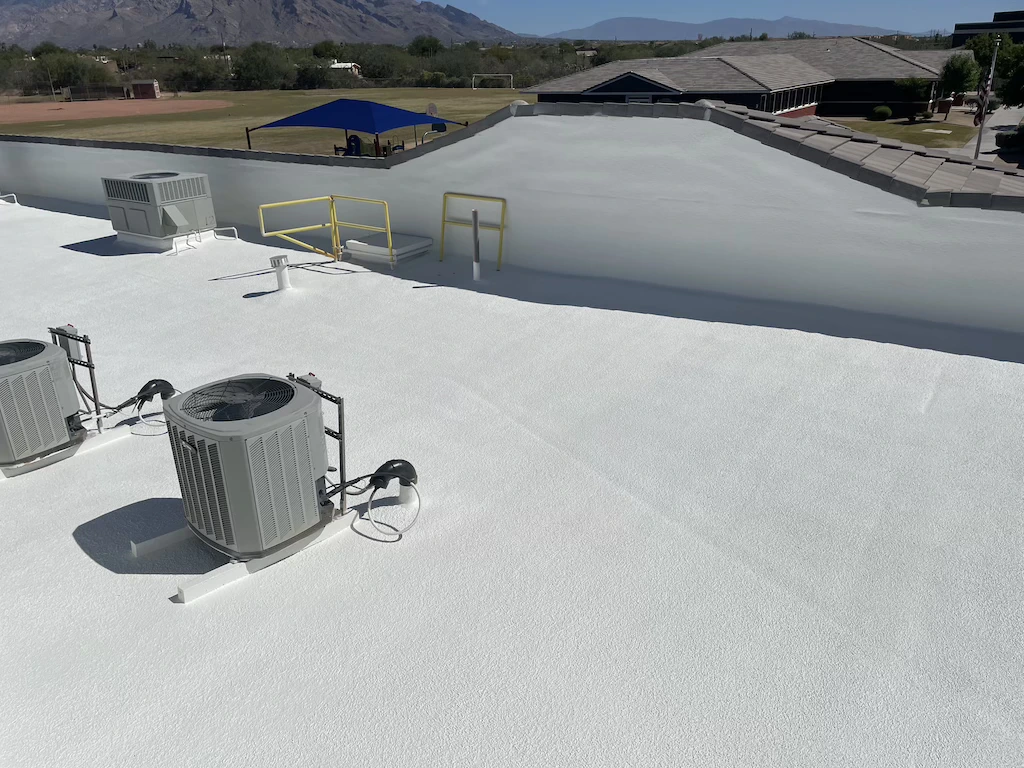
Spray polyurethane foam roofing — common on flat and low-slope sections throughout Tucson — relies on its protective coating to remain waterproof. When that coating has been degraded by pre-monsoon UV exposure and is then subjected to the volume and intensity of monsoon rainfall, coating failures that were manageable in dry conditions can rapidly become active leaks.
How to Prepare Your Tucson Roof Before Monsoon Season

The best time to address roofing vulnerabilities in Tucson is before monsoon season begins — not after the first major storm has already caused damage. Here’s what proactive preparation looks like:
Schedule a Pre-Monsoon Professional Inspection
A professional roof inspection in May or June — before the monsoon pattern establishes — gives you a clear picture of every vulnerability on your roof before it’s tested by a storm. A qualified Tucson roofing contractor will identify compromised flashing, aging pipe boots, clogged drains, deteriorating shingles, and failing foam coatings that need to be addressed before monsoon season arrives.
Clear All Drains, Scuppers, and Gutters
Debris accumulation in gutters, roof drains, and scuppers during the dry spring months is one of the most common contributors to monsoon-related water damage. Before the season starts, ensure all drainage pathways are clear and functioning. On flat roof sections, verify that drains are properly positioned and unobstructed to handle the volume of water a monsoon storm can deliver.
Inspect and Reseal All Flashing
Flashing around every roof penetration — chimneys, skylights, vents, pipe boots, and roof-to-wall intersections — should be inspected and resealed if any signs of separation, cracking, or lifting are present. Wind-driven rain during monsoon storms will find and exploit any weakness in these details.
Address Foam Roof Coating Before the Season
If your Tucson home has a foam roofing section and the coating is showing signs of cracking or UV degradation, pre-monsoon recoating is one of the highest-value maintenance investments you can make. A fresh coating applied before monsoon season arrives ensures the system is fully waterproof when it matters most.
Trim Overhanging Trees and Vegetation
Branches that overhang your roof become projectiles during high-wind monsoon events. Trimming trees back from the roofline before the season starts reduces the risk of debris impact damage and keeps organic material from accumulating on the roof surface and in gutters.
Document Your Roof’s Current Condition
Taking photos of your roof’s condition before monsoon season gives you a documented baseline that is invaluable if you need to file an insurance claim after a storm event. Date-stamped photos showing the pre-storm condition of your roof support a clear claim narrative and help establish what damage was caused by the storm versus pre-existing wear.
What to Do After a Monsoon Storm in Tucson
After any significant monsoon event, a prompt post-storm assessment is important — even if you don’t see obvious damage from the ground.
- Do a visual inspection from the ground: Look for missing shingles, displaced ridge caps, visible flashing damage, debris on the roof, and gutter damage. Note anything that has changed since before the storm.
- Check the attic and ceilings: Look for new water stains on ceilings, wet insulation in the attic, or daylight visible through the roof boards. Interior signs of water intrusion after a monsoon storm warrant an immediate professional inspection.
- Document everything with photos: If you observe any damage — interior or exterior — photograph it promptly. This documentation is essential for any insurance claim.
- Schedule a professional inspection if you suspect damage: Monsoon storm damage in Tucson is frequently invisible without a hands-on roof inspection. If your area experienced a significant storm, a professional assessment is the only reliable way to know whether your roof sustained damage that needs to be addressed.
- Contact your insurance company promptly if damage is confirmed: According to the Insurance Information Institute, prompt reporting after a storm event is one of the most important steps in the claims process. Arizona has specific timelines for filing weather-related claims.
How to Choose a Roofing Contractor for Monsoon Prep or Repair in Tucson
- Verify Arizona ROC license: Confirm the contractor is licensed through the Arizona Registrar of Contractors before any work begins.
- Look for genuine Tucson monsoon experience: A contractor with a track record of pre-monsoon inspections and post-storm repairs in the Tucson market understands the specific failure modes common here — from foam coating failures to wind-driven rain penetration at flashing details.
- Confirm insurance coverage: General liability and workers’ compensation coverage should be verified directly with the provider before work begins.
- Get a written scope and warranty: Any reputable contractor provides a written scope of work and a clear workmanship warranty on both pre-monsoon repairs and post-storm repair work.
Schedule a Pre-Monsoon Roof Inspection in Tucson, AZ
The most effective thing a Tucson homeowner can do to protect their roof during monsoon season is schedule a professional inspection before the season starts — not after the first storm has already caused damage.
Sunvek has been serving homeowners throughout Tucson and Southern Arizona for decades. We provide honest pre-monsoon inspections, quality repairs, and the kind of straight answers that help you make smart decisions about your roof before the storms arrive. Contact us today to schedule your inspection and head into monsoon season with confidence.